Ethnographic fieldwork in an Amazonian community
Authored by Anel Lopez De Romaña Pancorvo.
I am an anthropology PhD student currently doing a year-long ethnography in the southern Peruvian Amazon. I am living in a Matsigenka community, where I am studying how Indigenous foodways (including diets) are changing amidst profound social, economic, and environmental transformations associated with gas extraction on Indigenous communal lands.
Here I present two ethnographic ‘moments’, drawn from my fieldwork diary, which provide a glimpse into the everyday experiences that bring depth and texture to life as a researcher in the field.
(All names are pseudonyms.)
14/12/2025 Food or pet?
Today I spent the afternoon with Claudia’s family. While I was talking with Claudia, her granddaughter appeared carrying a baby achuni (a member of the raccoon family) on her head, which was slowly drifting off to sleep.
She told me that a few days ago she had been harvesting cassava in her fields (chacra) when she heard a gunshot fired by her brother. She later went to his house and found his wife preparing the achuni he had hunted.
It was cut into pieces and boiled. Some family members drank the broth, but Claudia dislikes the taste of this and prefers the meat roasted.
The hunted achuni had seven cubs still in the tree. Rather than leaving them behind, the hunter brought them home as gifts for his nieces. The family decided to raise them and the granddaughters, around six to eight years old, are largely responsible for their care.
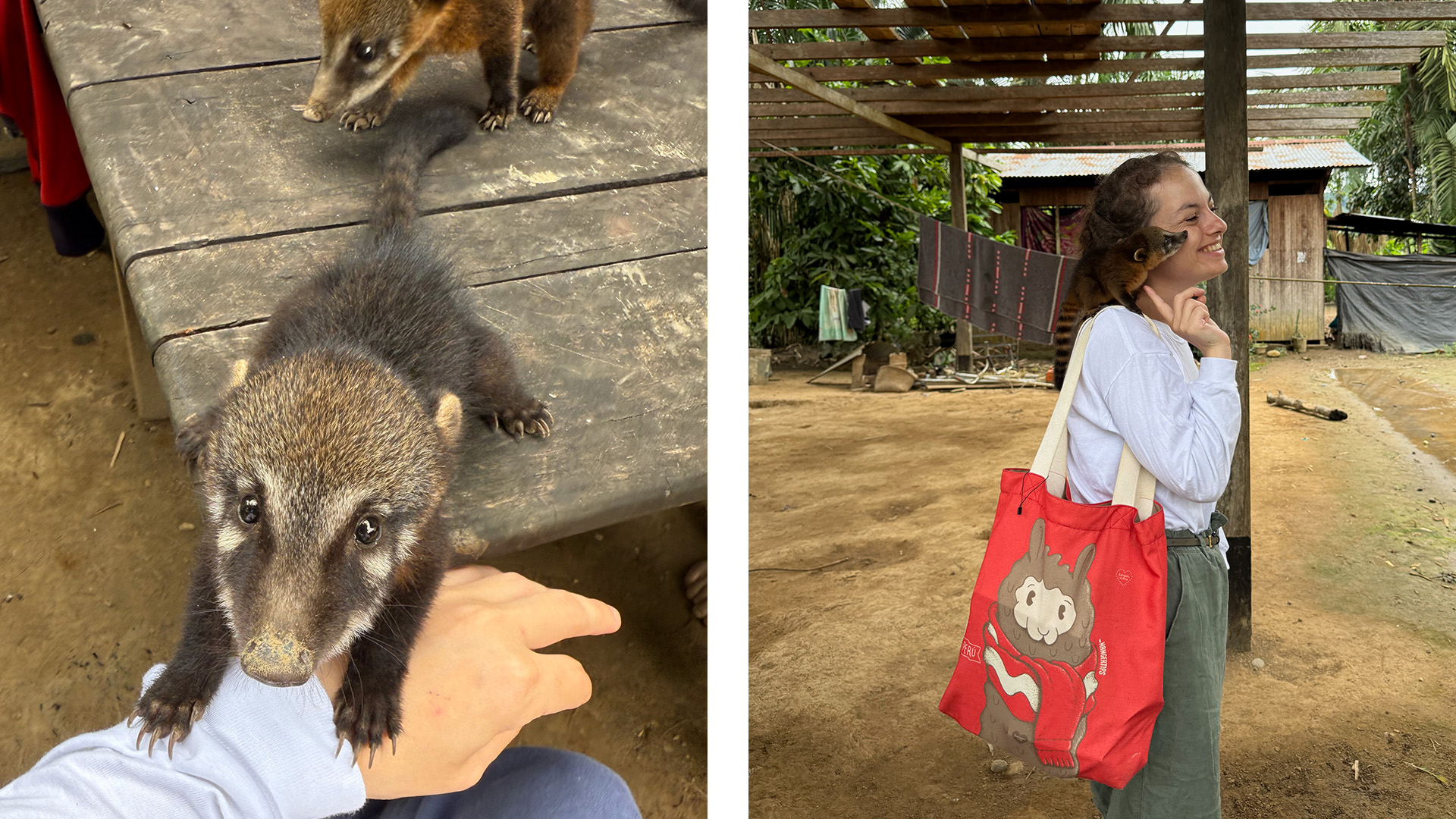 Perhaps children are encouraged to raise wild animals so they become familiar with their behaviour, an early form of training for future hunters. A local explained that in Matsigenka the word for a wild animal raised by a family and kept as a pet is piratsi, which is related to the word meaning ‘owner’ or ‘master’ of an animal.
What distinguishes an animal that is eaten from one that becomes a companion?
19/03/2026 Continuity and change
I spent the day at Fatima’s house. One of her granddaughters descaled a fish, while I walked with Fatima and one of her daughters to collect bijao leaves from Fatima’s chacra and vines from the forest on the way there.
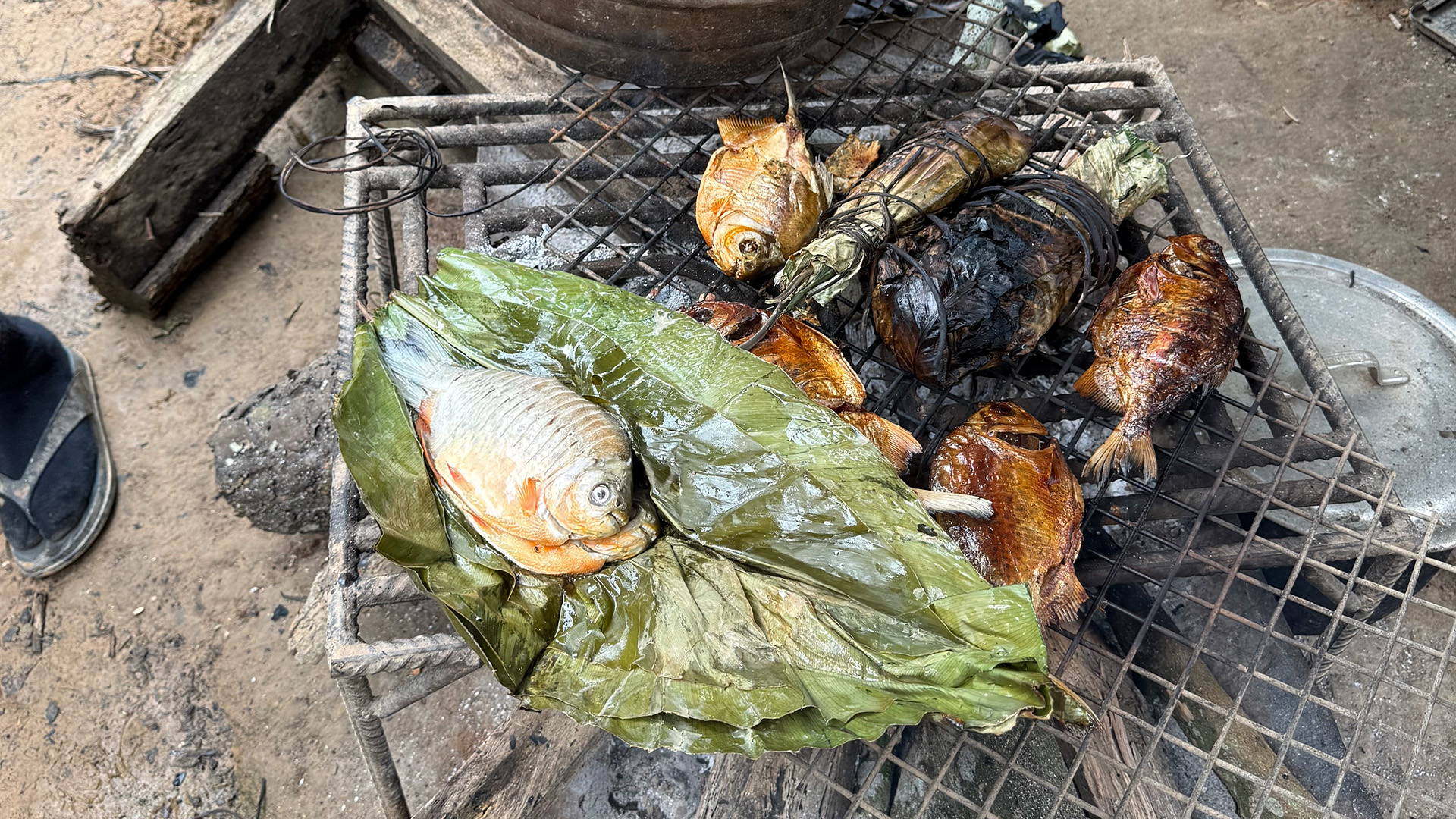
These were the three essential ingredients for the dish that we were preparing. When we returned, a daughter cut the fish into pieces, explaining that this helps bring out the flavour. Fatima rubbed the fish with salt, wrapped it in the leaves, and tied it up with the vines before placing it on the fire.
This bundle of fish wrapped in leaves and cooked over the fire is called patarashca. At the same time some cassava was boiling in a pot, and some was being roasted beside the patarashca.
 The grandchildren gathered around the cooking area as masato (an alcoholic drink made from fermented cassava) was prepared. A young girl sat peeling red sugarcane with a machete while the adults commented that it is good for diarrhoea. As we were chatting, an older brother walked past carrying a sack of cassava.
When the patarashca was ready and the cassava had finished cooking, the family gathered around the fire to eat. They explained that patarashca is a common traditional dish, central to Matsigenka food culture.
Yet while nearly all of the ingredients reflect a continuation of household-level food autonomy, the key ingredient did not come from the surrounding environment: the fish. In the face of declining fish stocks, which locals attribute to the gas extraction, the fish was farmed.
It therefore had to be purchased, requiring money rather than the fishing skills that would once have secured this central ingredient of the meal.