15yrs | A puzzling and enduring tradition
Authored by Jo Garrett
The Centre has had a puzzle sitting out in the atrium for as long as I’ve worked here, which is a fair few years now!
I love it because it offers a kind of relief you don’t often get in a working day – it’s something you can focus on away from a screen. It’s perfect for a five-minute break: just long enough to slot in a few pieces and reset your brain.
It’s also a good icebreaker and conversation starter; you can chat to newcomers and longstanding colleagues alike as you try to find those particularly tricky pieces.
Over the years, the puzzles we’ve attempted to complete have ranged from extremely easy to absolutely infuriating! Every now and then we have had to admit defeat, although I am always strongly opposed to giving up.
We’ve had very silly scenes – with mischievous cats and unicorns – as well as kitschy countryside paintings, and photos of faraway places.
Some have been gifted when people leave the Centre. Karlijn, one of our lovely interns, gave us a custom-made puzzle created from a photo of a visit to Chloe Bine’s market garden, and the “Puzzle of positivity” was donated by Prof Lora Fleming, the Centre’s first director.
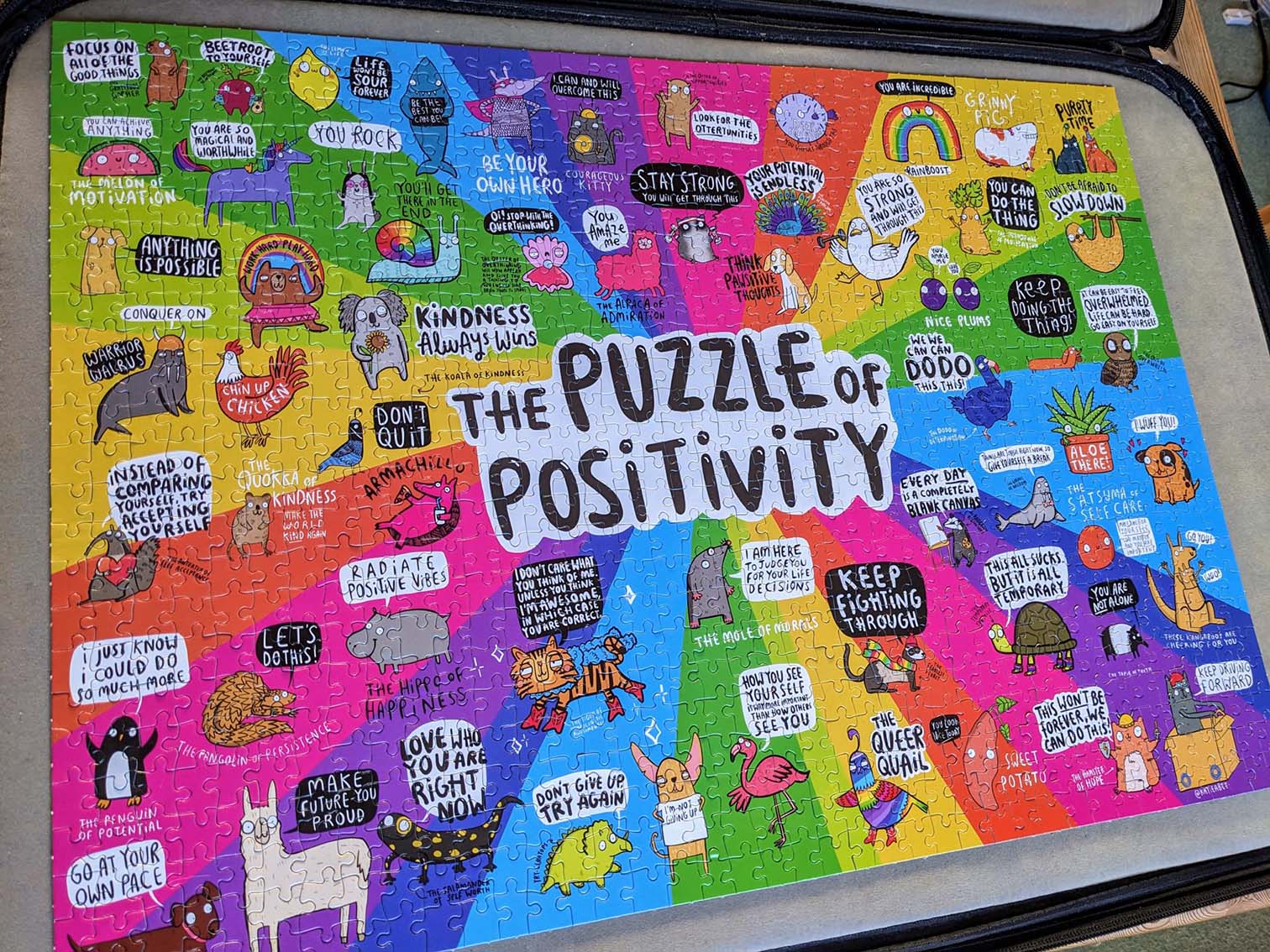
The puzzle of positivity.
Luckily, we’ve always had a seemingly endless supply. People bring them in from home or pick them up cheaply somewhere. Once a puzzle is finished, it might return to its original owner, someone else might take it home for a rainy weekend, or it gets passed forward to whoever wants a new challenge.
One of our keenest puzzlers, Prof Ruth Garside, says the trick is finding the right level of difficulty. Too easy, and it’s boring. Too hard, and everyone loses motivation. We recently finished a particularly difficult puzzle, shown below, that was truly maddening at times. But we collectively persevered and everyone felt a real sense of achievement when it was completed.
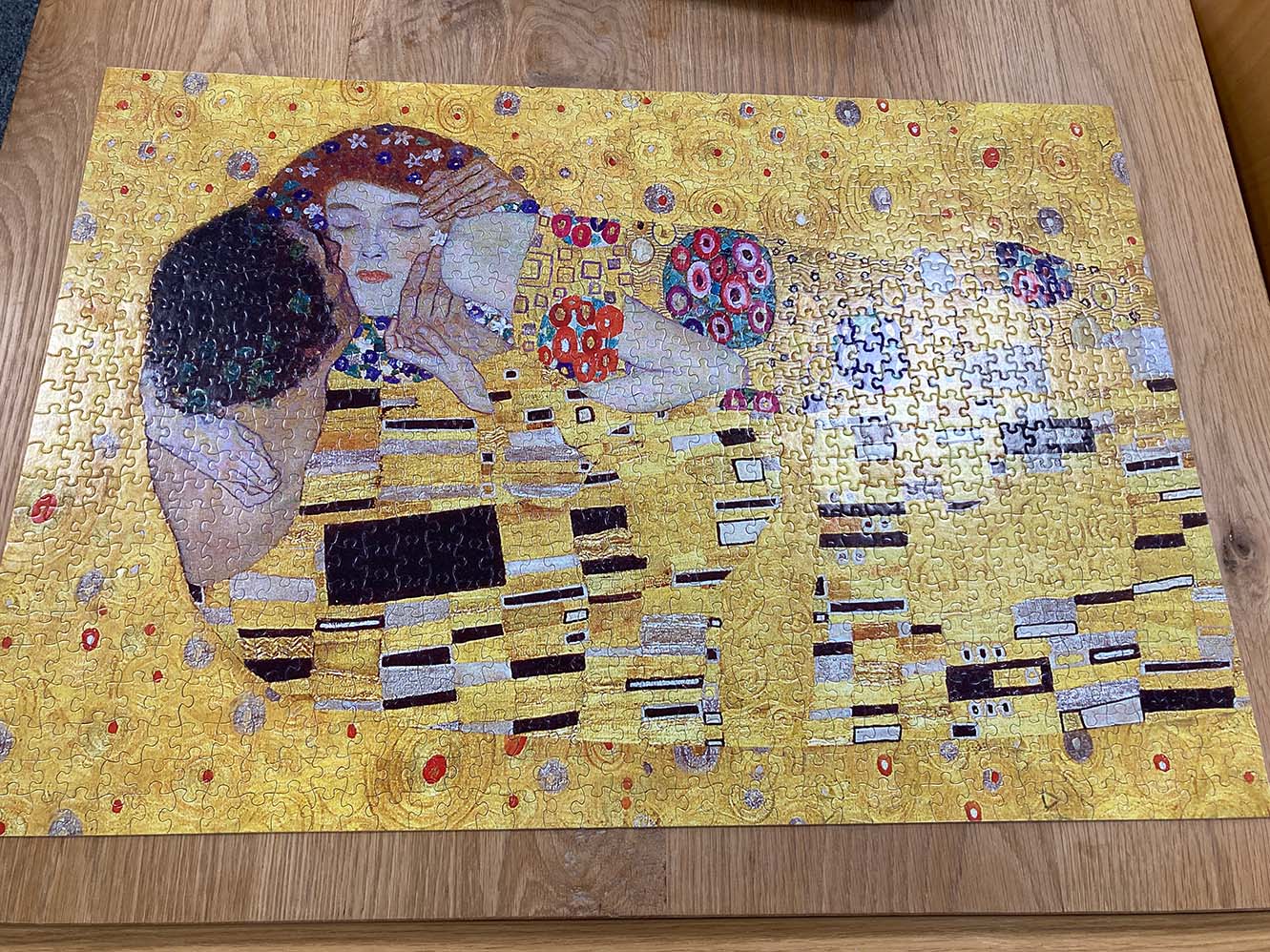
“The Kiss” by Gustav Klimt.
Sometimes, it’s hard to get going, and sometimes you have to get your eye in first; to notice the slight differences in shade or patterns.
Much like my research, I like the systematic stage. Sometimes the only option to find a piece is by trial and error. I think this is where people can lose motivation or want to give up. Whereas, because I quite like this methodical, satisfying stage, I am willing to do this trial-and-error approach to finish it. I also quite like the sorting stage – sorting the pieces into shape, by ‘innies’ and ‘outies’ (three or four corners) – there’s almost a mindfulness to the action that leaves me refreshed and ready to get stuck back into the analysis I’m working on.
Sometimes the start of the puzzle is overwhelming. But just like the Centre writ large, one step at a time, and with everyone working together in their different ways, we triumph.